Hey guys! So a lot of you have enjoyed and commented on my 9 Day Itinerary for Your First Trip to Japan. But I’ve been getting quite a few questions about the nuts and bolts. How did we afford to go? How did we get such good plane tickets? Where did we stay?
In this post, I wanted to talk about how you can plan your trip to Japan, all on your own! I know it can be a little intimidating to plan a trip overseas, especially if the country you’re going to uses a different language. But you can totally do it, and it’s a lot of fun!
The short answer to how we planned everything was: research.
I know that sounds boring, but in my opinion, doing some research and being well prepared is going to allow you to make the most of your trip. You don’t want to fly halfway across the world just to get there and spend your first day shopping for the right phone cable. It also allows you to be in complete control of finances. This is important for me, because I’m always traveling on a budget, so planning my trip on my own gives me a lot of control of how much I’m spending.
BUT I know that not everyone is quite as crazy as me when it comes to research. It’s not like I sat on the floor of Barnes & Noble for hours reading through books or anything…. ha….
Anyway, I’m going to do a bunch of the work for you! Here are the things you need to do and know before you go to Japan.
Passport
Okay maybe this is a little obvious, but passports work differently in every country. If you need a new passport or yours is close to expiring, make sure you have plenty of time to get a new one before you start buying plane tickets!
This goes for any other required travel documents you may need. For example, in America, we have Global Entry, which I highly recommend for international travelers. It’s optional, but takes a few months to get.
Plane Tickets
Probably the biggest expense out of your entire trip is going to be your airline tickets. And there’s no getting around it, it’s a chunk of change to fly to Japan. But what I would recommend is getting your tickets as far in advance as you’re comfortable with. I usually get mine around 6 months in advance, and the reason is because they are way cheaper!
We got our tickets for Japan 6 months in advance for around $900 USD, and yes, I cried a little, but the same tickets were $2500+ one month in advance. And actually, the tickets we wanted were $700 when we first looked, but we waited a little while, and the price steadily went up. So you can see the huge difference that getting your tickets early makes.
Of course, there is a little bit of risk involved with getting plane tickets so far in advance.
- What if something happens and I can’t go? I would recommend getting travel insurance for your plane tickets. You can usually get it as an add on, and it’s very affordable. Mine was $50 USD.
- There could be a schedule change. Honestly, this could happen whether you book far in advance or not, but you’re allowing for a larger chance of it happening when you book really far in advance.
To help you when these situations occur, I would recommend booking your ticket directly with the airline. On my first trip to Japan, I booked through Priceline, which is a travel agency, because it was cheaper. About a month after we booked our tickets, I got a notification that one of my flight times had been bumped up 20 minutes. It didn’t make much of a difference, but then TWO WEEKS away from the trip, one of my flights just got completely cancelled and it was the absolute worst.

The reason WHY is because rescheduling my flights through Priceline was nothing short of disastrous. When you book with a travel agency, you can’t communicate directly with the airline. Your agency has to communicate on your behalf. So, I spent 20+ hours in total on the phone going back and forth between customer service and the airlines. Eventually, I got it figured out, but count that as a travel pro tip! Book with the airline.
I swear I’m almost done talking about planes. The last piece of advice I’ll offer is that your tickets are going to be much cheaper if you travel outside of tourist season!
Book Your Accommodations
The next thing you need to do for your trip to Japan is book your hotels, hostels, or Air BnBs. You don’t need to do this quite as far in advance, but I would recommend giving yourself enough time. As you’re probably aware, Japan is very crowded, and if you’re going to any big cities like Tokyo or Kyoto, prepare for places to fill up fast.
If you’re looking to save money, I would recommend staying at hostels. Hostels are also great for solo travelers or small groups. Contrary to what you might think, hostels in Japan are very trendy, and the service was top notch everywhere we went. We even stayed in a capsule hotel in Osaka and it was amazing!
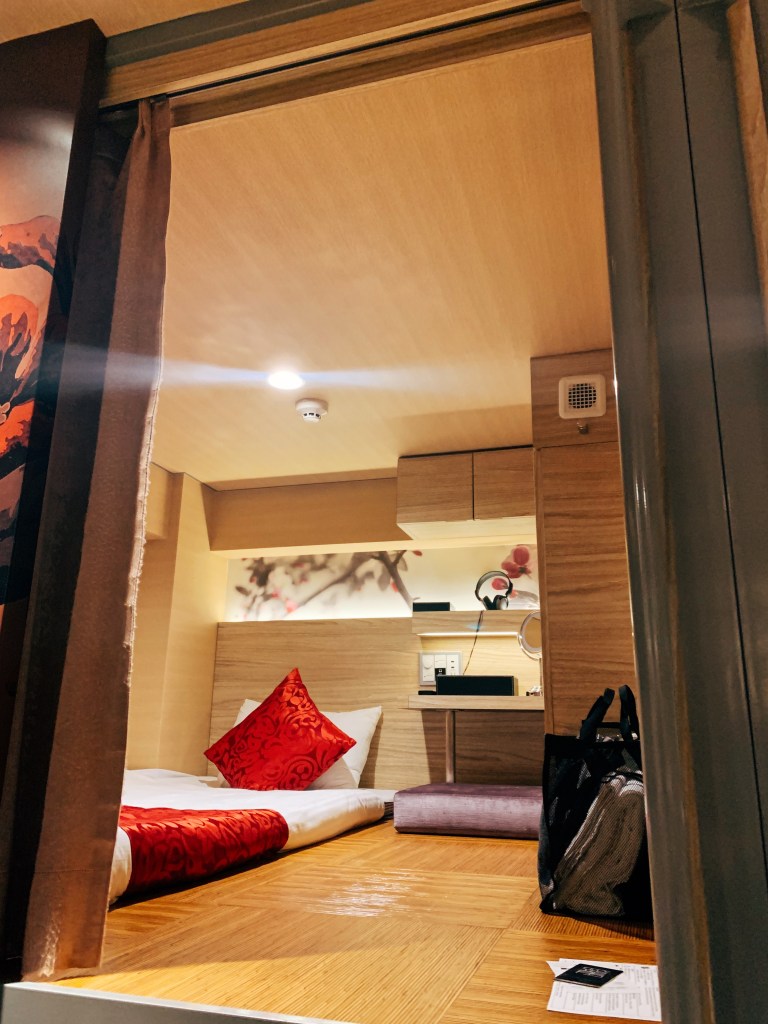
Hostelworld.com is my go-to source for looking for places to stay. You can see countless photos of each hostel, the types of rooms that are offered, and a list of the amenities. A lot of hostels have free wifi and breakfast, and most have very cheap laundry services and drink/food specials.
We booked our hostels about 3 months out from our trip, and that’s because the places we wanted to go were already selling out! The good thing is that there is an abundance of places to stay in the major cities, so you should have plenty of options.
Some of you may be a little more adventurous and looking to hotel hop once you’re there. The reasons I like to book in advance are:
- You can stick to your budget easily. For me, it’s nice to know how much I’m going to be paying before I actually have to pay!
- You can plan your trip around where you’re staying. Depending on how close or far you are to train stations or bus stops, you may have to plan certain trips around your location.
JR Pass
If you’ve done any research on Japan, you’ve probably seen the Japan Rail Pass come up a billion times. If you’re going to be traveling by Shinkansen (The Bullet Train), a JR pass might be a good option for you.
Basically, it’s a discounted ticket. However, it’s only a discount if you are planning to take the train multiple times. Your JR pass will grant you access to ride most of the Shinkansen trains for a certain time period: 7, 14, or 21 days.
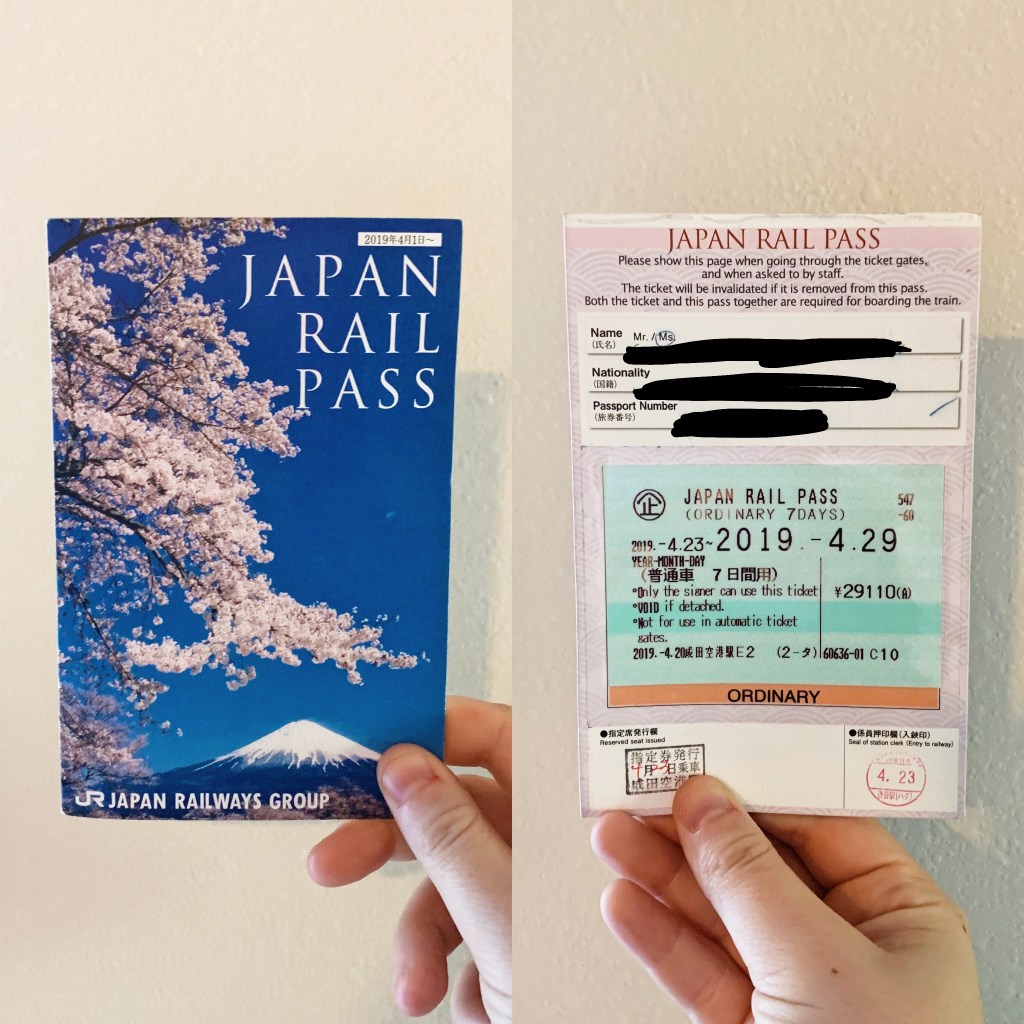
You can also use the JR pass on local trains. However, I wouldn’t recommend buying it if you’re only riding local trains, because it’s really cheap to ride the trains in Japan, and the JR pass is… well, not.
The typical prices for a JR pass are around 39,000 JPY ($360 USD) for a 7-day pass, 63,000 JYP ($590 USD) for a 14-day pass, and 82,000 ($770 USD) JPY for a 21-day pass. One trip from Tokyo > Kyoto is about 14000 JPY ($130 USD), so you can see why you’d need to travel several times for the ticket to be worth it.
If you know what cities you’re planning on taking the Shinkansen to/from, you can use this JR Pass calculator tool to see if buying the pass is a good idea. We ended up traveling back and forth between Kyoto, Osaka, and Tokyo enough that the 7 day pass was worth it for us.
The last thing to mention, and this is the most important thing, is that you have to get your JR Pass before you go.
There are several different websites that sell JR passes, which is a little annoying because it’s hard to know which one to buy from. We got ours from https://www.jrailpass.com/, and they were great!
As far as the process for getting your pass goes, you will be sent a voucher in the mail, which you will exchange for the actual JR Pass in the airport. You cannot buy a JR Pass in Japan. You must have the voucher before you go! If you have more questions about the JR pass, check out https://www.jrailpass.com/ and you’ll find more information.
Reserving Bullet Trains
Since I’m on the the topic of JR passes, I wanted to quickly mention HyperDia, which was a huge help to us in our planning.
It’s a little difficult to find the train schedules for the Shinkansen, but with this site, all you have to do is put in the date and locations you’re traveling to, and you’ll see all of the train options.
This is really helpful because local trains in Japan leave every few minutes, but the Shinkansen trains are far more limited. If you’re traveling in a busy tourist season, you might want to make reservations to ensure you have a spot on a train.
You can make your reservations at the airport when you exchange your JR voucher for the pass, so knowing ahead of times which trains you are planning on taking is a good idea. If you have a JR pass and you can’t make reservations at the airport, you can make them at any JR station in Japan. Also, it’s worth mentioning that most reservations are free with your JR pass!
You can also make reservations when you purchase your bullet train ticket (if you don’t have a JR pass).
Pocket Wifi
I’m not going to lie, I love pocket wifi. I’m pretty sure we wouldn’t have survived with out it! And it’s very common in Japan.
Pocket Wifi is one of the cheapest options for using your phone in Japan. You may have a cell provider that allows you to purchase overseas data, but at least for me, that was a pretty expensive route.
Pocket Wifi is exactly what it sounds like, a little device that you carry with you that gives you high speed internet connection. This will be particularly useful for you in Japan because there is not a lot of public Wifi, and you’ll likely be using your maps a lot to get around.
We used Japan Wireless, and for 12 days, we only paid 7,630 JYP ($70 USD). You can see their full list of rates here.
Pocket Wifi is another thing you need to get in advance. This is because you will pick up your Pocket Wifi at the airport. On the site, there are great instructions for where to go, with photos and everything! It’s really easy to find.
You’ll get your Pocket Wifi as well as a charger and a return envelope. When you’re about to leave Japan, you’ll need to put everything into that envelope and toss it in a mail slot. Most convenience stores have them and they will be easy to find.
Cash
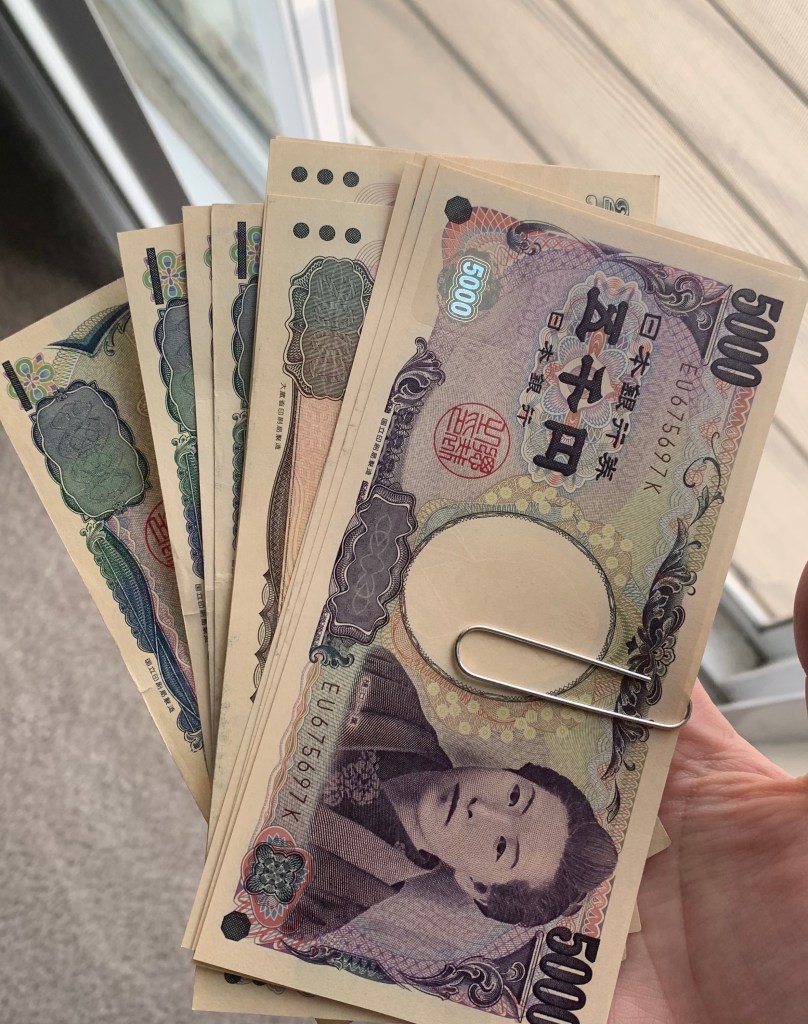
If you didn’t know, Japan is a very cash run society. A lot of restaurants and shops won’t accept credit cards. Even though you’ll be able to find ATMs in most convenience stores, I would recommend getting some cash right before you go. You’ll likely use it right away, whether it’s getting a train ticket or paying for your hostel.
Outlets
Outlets can be easily overlooked when traveling overseas. Japan uses 2 pronged plugs, similar to what we use in North America. However, Japan’s voltage is 100 Volt, whereas in America we have 120 Volt, so some devices may not work.
If you’re not sure if your device will work, check to see whether or not it’s dual voltage. Single voltage devices will need a converter, but dual voltage devices will work fine. Your smartphones and external chargers should be good, but if you’re bringing any flat irons or blow dryers, you may need a converter.
Another thing to keep in mind is that if you’re using any sort of power strip or wall plug with multiple outlets, those will typically be 3 pronged plugs, so you’ll need an adapter for them. Most laptop chargers are also 3 pronged and won’t fit into the sockets in Japan. Here is a really cheap 3 to 2 plug adapter on Amazon that I have.
Make an Itinerary
You might not be an itinerary type of person, and that’s okay, but you should know, I am! The biggest reason I would suggest making an itinerary is because there is just. so. much. to. do. If you’re visiting Tokyo for a week, it’s going to be incredibly overwhelming if you go into it blindly.
Something I found to be really helpful was Google Maps. Not only was it useful while we were in Japan, but you can actually create your own map with Google maps. You can mark and label different locations, put them into categories, literally the WORKS!
I created a map for every place we went and then marked locations in different categories: restaurants, areas to visit, specific attractions, etc. You can only do this from a computer as of now, but you can view the map on your phone with the Google Maps app.
This might sound like a little much, but the cool thing is that when we were in a certain area and thinking “What else is there to see here?” or “I’m hungry,” we could open the map and see if there were any places nearby that we had wanted to visit. This was the best way for us to make sure we didn’t miss anything!
If you’re looking for an example itinerary, check out my post: 9 Day Itinerary for Tokyo, Kyoto and Osaka!
Learn Some Phrases
The last thing I’ll leave you with is a couple of words and phrases that are really going to help you in Japan. Yes, you can get around Japan without learning Japanese, but you’ll find that just learning a few words will get you a long way.
- すみません (su-mi-ma-sin) means “excuse me.” This is pretty versatile, but the ways you will likely use it is to get the attention of someone on staff in a restaurant, store, or train station. You can also use this phrase if you bump into someone or need to squeeze past someone, which is inevitable!
- ありがとう (a-ri-ga-to) means “thank you.” You’ve probably heard this one before, but a simple thank you is very meaningful in Japan. If you want to a little more respectful, you can say “ありがとうございま (a-ri-ga-to go-zai-mas).” Say thank you when you leave stores or restaurants or if someone helps you out.
- Another good thing to know is the kanji for restrooms. Most places will still use the male and female icons, but just in case, the kanji for man is 男, and the kanji for woman is 女.
Like I said at the beginning of this post, this is not necessarily an “everything you need to know” post, so I won’t go too much further into the language. If you want to learn more, like I did, go for it! If you’re interested in learning more phrases before your trip, make sure to leave me a comment and let me know!
Recap
So let’s recap, since I just threw a ton of information at you. To plan your trip to Japan you need to:
- Have a valid passport/other travel documents
- Buy your plane tickets
- Book your accommodations
- Grab a JR pass (if needed)
- Reserve your pocket wifi
- Get some cash
- Make sure you have the correct outlets and converters
- Do some research and create an itinerary
- Learn a couple of phrases
The good thing is, you don’t have to do this all at once. If you buy your plane tickets 6 months out like we did, you’ll have plenty of time to do the rest! Planning your trip can be as gradual or as all-in as you want, but trust me, it’ll be time to go before you know it.
頑張って (Good luck) !!
 samanthanowhere